Skip Navigation

University of Nebraska–Lincoln

GPVEC

Great Plains Veterinary Educational Center

Great Plains Veterinary Educational Center
Student Handbook

The University of Nebraska Great Plains Veterinary Educational Center (GPVEC) was developed as a part of the Cooperative Agreement for Veterinary Medical Education between Iowa and Nebraska. Through the program, a defined number of qualified Nebraska students are accepted into the Iowa State University (ISU) College of Veterinary Medicine in exchange, partially, for programs offered at the GPVEC. The GPVEC is located at the U.S. Meat Animal Research Center (USMARC), the third cooperating institution in this program.

  • GPVEC Mission
    • The mission of the GPVEC is to establish a program for food animal health management for beef cattle and sheep through education, research, and service.

      Students who participate in electives have the opportunity to work with herds of cattle and sheep at the USMARC.  Electives offer field experience.

      Clinical facilities at GPVEC are designed primarily to accommodate specialized treatment and surgical procedures for beef cattle.  A clinical laboratory is available and students will be exposed to laboratory techniques for making diagnoses.

      The GPVEC provides post-mortem examinations of case mortalities that occur at USMARC. 

      The computer classroom is available to students for completing their assignments for rounds and electives and accessing the Internet.  Students may be instructed in computer use for record keeping and analysis, epidemiology, analysis of production and performance data, economic projections and analysis, and marketing of veterinary services.

      The GPVEC library is available for student use.  The library has a collection of journals, veterinary textbooks, and industry publications for use by students in gathering information for rounds.

      Electives are open to veterinary students attending AVMA accredited colleges of veterinary medicine.  Students who reside in the residence hall are responsible for a $40 refundable cleaning deposit and a minimal room fee.
  • Registration
    • University of Nebraska Great Plains Veterinary Educational Center (GPVEC) electives are open to all veterinary medical students attending AVMA accredited colleges of veterinary medicine.

      Students enrolled in any college of veterinary medicine, other than Iowa State University, should contact the GPVEC directly to register.

      At the GPVEC contact:

      Debbie George
      University of Nebraska
      Great Plains Veterinary Educational Center
      P.O. Box 148
      Clay Center, NE 68933
      (402) 762-4501
      FAX: (402) 762-4509
      E-mail: dgeorge@gpvec.unl.edu
      Web Address: http://gpvec.unl.edu

      Iowa State students must register through Iowa State University. Contact Mindy Schminke at
      (515) 294-0772 or schminke@iastate.edu.

      Veterinary Medicine Administration
      2270A Veterinary Medicine
      Iowa State University
      Ames, IA 50011-1250

      Students with questions regarding any electives are encouraged to contact the GPVEC for more information.

  • Clinical / Calving Elective
    • Dates Offered                                            Enrollment

      April 11-15, 2011                                             3

      April 18-22, 2011                                             3

      This clinical rotation involves participation in veterinary field services at the U.S. MARC during calving season.  Activities include examination, diagnosis, treatment, and intensive care of individual animals as well as occasional herd problems.  Additional activities include clinical and/or microbiolgical diagnostic techniques, clinical pharmacology, record keeping, and health surveillance.

      Students will accompany the "on duty" veterinarian on all cases, including emergency out of hour calls.  The majority of clinical activities during calving season are related to peri-parturient, perinatal and neonatal problems.  Students will assist in handling difficult calf deliveries and cesarean sections and will be involved with the necropsy examination of all animals lost during the previous 24 hours.

      Students need two pair of clean coveralls, rubber overshoes, and appropriate winter clothing.  A stethoscope and thermometer are also desirable. 

      This clinical rotation begins Monday at 10 a.m. and ends Saturday afternoon.

  • Bovine Reproductive Elective
    • Dates Offered                                                  Enrollment

      October 25-29, 2010                                             10

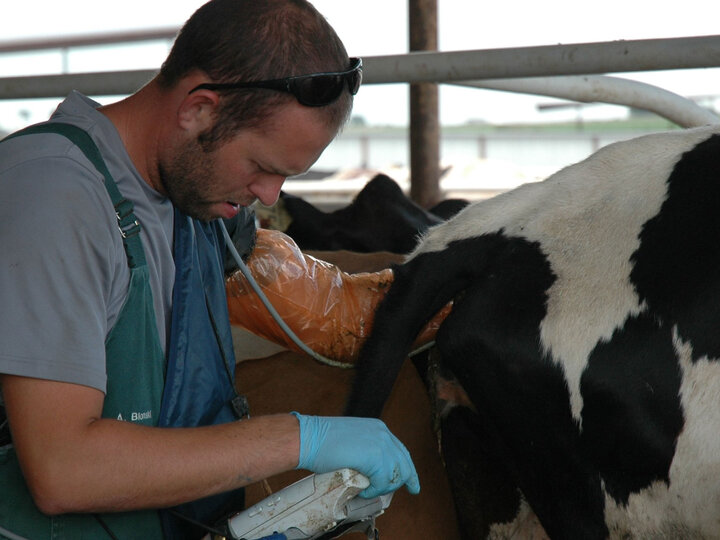
      This elective involves some of the clinical techniques utilized in beef cattle reproductive management. The majority of time will be spent in the examination of cows for pregnancy and the collection of ovarian data from nonpregnant cows.    Additional opportunities will involve hands on activities such as data collection and analysis, breeding herd nutrition, artificial insemination, and the use of ultrasound technology. 

      Students will need to bring:

      Two pairs of coveralls (OB suit desirable)
      Overshoes or Rubber Boots
      Sufficient outerwear for winter conditions
      Student ID / Badge

      Sleeve protectors or rubber suits are recommended but not required.

      The Bovine Reproduction Elective begins Monday at  8:00 a.m. unless students are notified otherwise.

  • Bull Breeding Soundness Examination Elective
    • Date -- April 18-22, 2011
      Enrollment -- 5

      The Bull Breeding Soundness Examination Elective involves training in all phases of the examination and evaluation procedure for herd bulls and/or sale bulls as recommended by the Society for Theriogenology.

      Students will need to bring:

      Two pairs of coveralls
      Overshoes or Rubber Boots
      Student ID / Badge

      The Bull Breeding Soundness Elective begins Monday at 8 a.m. unless students are notified otherwise.

  • Calving Elective
    • Dates Offered                                    Enrollment

    • August 9-13, 2010                              2
      August 16-20, 2010                            2

      March 14-19, 2011                              4
      March 21-26, 2011                              4
      March 28 - April 2, 2011                      4
      April 4-9, 2011                                    3

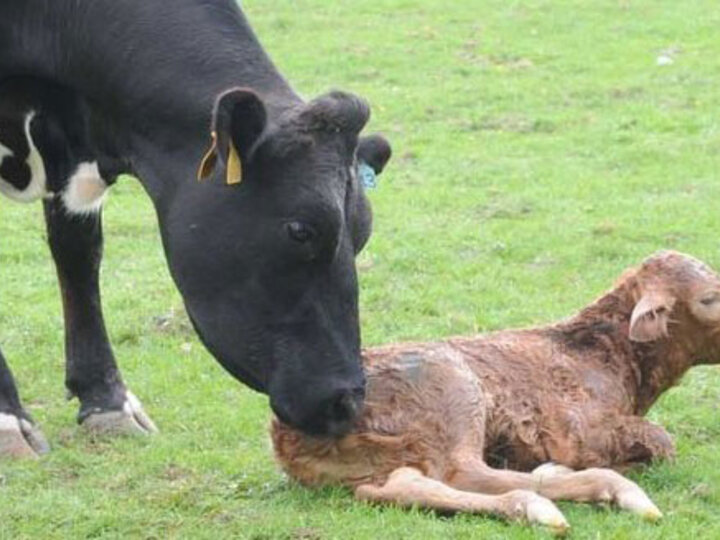
      The Calving Elective provides an opportunity to expand knowledge and experience in all phases of calving management.  The program is structured around normal calving operations at U.S. MARC.  The GPVEC and USMARC veterinary staff will make an effort to include students in veterinary activities that take place during the Calving Elective.  The opportunity exists for assistance in diagnosis, treatment, and management of many commonly encountered situations in the dam and calf.  Students are encouraged to make every effort to become involved in U.S. MARC calving activities.  Direct involvement includes routine husbandry activities beyond those involving traditional veterinary roles which are expected of the student.

      Students are encouraged to offer suggestions and recommendations to the staff.  At the same time, they must realize that the final decisions, as well as responsibilities regarding intervention, method of delivery, and level of assistance by the student, or the time and method of treatment for periparturient disease conditions will rest upon the U.S. MARC employees and established protocol.  The primary mission of U.S. USMARC is research.  Therefore, the main concern is collecting research data in an orderly and repeatable manner.  It is important that each student realize the limitations imposed regarding the development of experience at critical times due to the demands of research protocol and the established chain of responsibility.

      Assistance with C-sections may be possible but are not a guaranteed event.

      Students are expected to learn as much as possible about the entire calving management operation.  Some possible activities are:
      1. Recognition of the characteristics of "springers."
      2. Detecting early signs of impending parturition.
      3. Observation of the normal birth process.
      4. Determining the optimum time of intervention for calf and dam health while   following established guidelines for collection of research data.
      5.   Handling animals properly to minimize injury and improve mothering ability.
      6. Performing rectal and vaginal examinations.
      7. Assisting in the delivery of dystotic animals.
      8. Developing decision making criteria and evaluating results.
      9. Care and monitoring of postpartum calves and dams for good preventive health and early disease detection.
      10.  Performing routine husbandry chores such as feeding, cleaning, assisting calves to nurse, etc.

      Students involved in the Calving Elective will be assigned to duties following their arrival. 

      A schedule for transportation to the areas will be provided when the students arrive at the GPVEC.

      Students participating in this program may be asked to complete a paper and present it to the GPVEC faculty and other students.

      Students are required to participate in necropsy and rounds.

      Students will need to bring:

      Two pairs of coveralls
      Overshoes or Rubber Boots
      Student ID / Badge

    • The Calving Elective will begin Monday at 8 a.m. unless students are notified otherwise.  Students will be dismissed at noon on Saturday

  • Feedlot Production Management and Health Consulting Elective
    • Dates Offered                                     Enrollment

      October 4-8, 2010                                       4
      October 12-15, 2010*                                 4
      October 18-22, 2010                                   4
      February 14-18, 2011                                  7

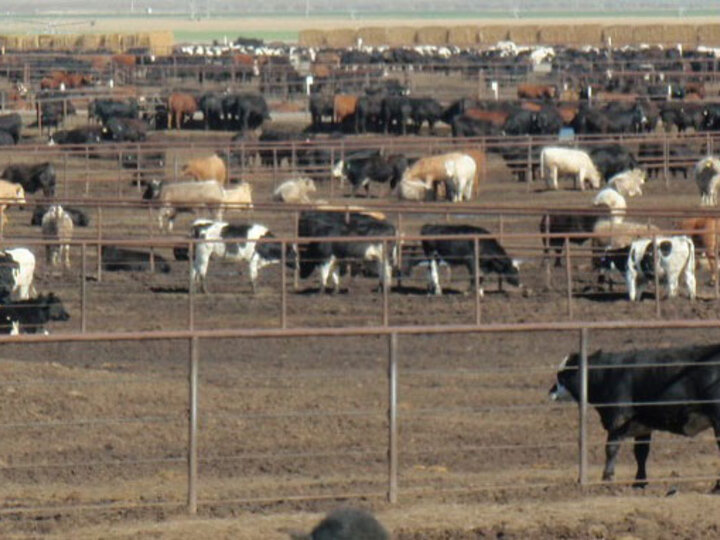
      The students in this elective will visit the U.S. MARC feedlot and commercial feedyards.  This elective focuses on production management, the veterinarians role in production management and economic analysis of production decisions.

      The activities of the students enrolled in the Feedlot Production Management and Health Consulting Elective vary depending on weaning schedule at the U.S. MARC.  Students enrolled during the time USMARC weans their spring born calves will have the opportunity to actively participate in the hands-on cattle handling and care activities of the U.S. MARC calves.  During the other offerings of the elective students will spend time at different commercial feedyards, but will not have the opportunity to have the intensive hands-on activities.

      All students will learn how to evaluate production techniques and evaluation of production including ration and feeding management, health management program development and evaluation, environmental management, quality assurance, feedlot necropsy and microbiology techniques, and breakeven analysis.  Working on approaches to solve seasonal health problems within the management objectives for different feedyards is the strong emphasis of this elective.  Students will be given several computer aided health and management evaluation programs.  Students may have the opportunity to follow cattle to a packing plant to learn the methods for tracking animals into the food chain, identifying production problems that are not diagnosable at the feedlot level, and monitoring beef quality assurance.  Appropriate biosecurity activities will be emphasized and practiced between visits to different operations.

      Students will need to bring:

      Two pair of coveralls (washed daily)
      Overshoes or Rubber Boots (must not have buckles or laces)
      Stethoscope
      Student ID / Badge

      Please bring appropriate footwear to change for use in the field or classroom and residence hall.

      The Feedlot Production Management and Health Consulting Elective begins Monday at 10 a.m. unless students are notified otherwise.

  • Pregnancy Examination Elective
    • Dates Offered                                      Enrollment

      September 13-17, 2010                               2
      September 20-24, 2010                               2
      September 27 - October 1, 2010                  2 
      October 4-8, 2010                                        2
      October 12-15, 2010*                                  2

      *(begins on Tuesday, due to Holiday)

      The Pregnancy Examination Elective involves students, the GPVEC faculty, and USMARC personnel during pregnancy examination.  Activities involve rectal examinations for pregnancy, collecting data and entry into the CowHerd/CowCalf computer software program to evaluate the reproductive performance of the herd.  This elective is designed for students who have some palpation experience and are interested in honing their skills.  Some ultrasound technology will be utilized.  Pregnancy Examination Occurs during yearly fall herd work at the U.S. MARC, therefore, speed and accuracy will be stressed, rather than basic technique.  Introduction into rectal examination for reproductive use is stressed during the Bovine Reproduction Elective.

      Students will need to bring:
      Two pairs of coveralls
      Overshoes or Rubber Boots
      Sufficient outerwear for winter conditions
      Student ID / BadgeSleeve protectors or rubber suits are recommended but not required.

      The Pregnancy Examination Elective will begin Monday at 8:00 a.m. unless students are notified otherwise.

  • Lambing Elective
    • Date Offered                             Student Enrollment

      May 10-14, 2010                                       1
      May 17-21, 2010                                       1

      January 18-21, 2011*                               1
      January 24-28, 2011                                 1

      February 14-18, 2011                               1

      February 22-25, 2011*                             1

      March 14-18, 2011                                    1
      March 21-25, 2011                                    1

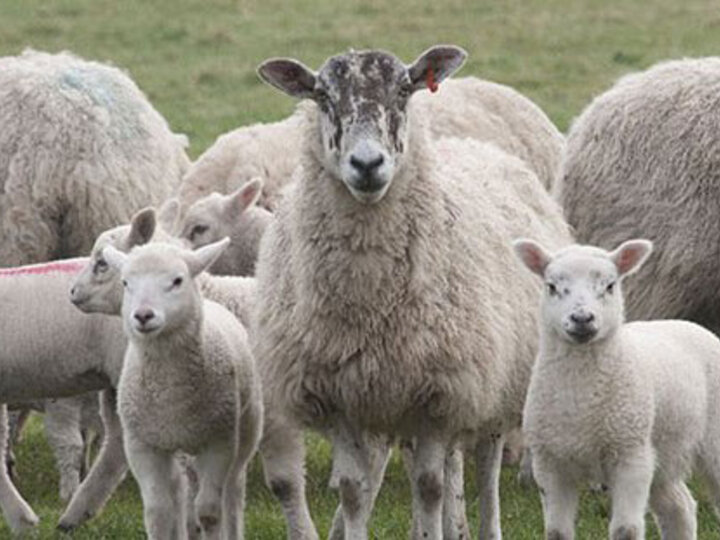
      The Lambing Elective involves students with the U.S. MARC lambing crew and GPVEC faculty in observations, assistance with delivery when necessary, and routine lambing duties.  Students will work with veterinary personnel in sheep necropsy and loss surveillance. Students will be involved with daily necropsies.  Activities and objectives closely parallel to those listed in the Calving Elective.

      Self study material will be provided covering topics such as pre-breeding and breeding, pregnancy diagnosis, pregnant ewe management, pre-lambing ewe/lambing management, feeder lamb health and nutrition management, and replacement ewe and ram management. 

      The Lambing Elective begins Monday at 10 a.m. unless students are notified otherwise.

  • Weaning Management Elective
    • Dates Offered                                      Enrollment

      September 13-17, 2010                                 3
      September 20-24, 2010                                 3

      This is a hands-on elective in which students participate in the weaning management at the U.S. Meat Animal Research Center. Students will be involved with processing, feeding, finding, and treating sick calves. Additionally, students will be introduced to developing weaning rations and managing feed delivery. Students will also learn how to develop vaccination and treatment protocols and each student will have as an objective the development of their own vaccination and treatment protocol template.  As time allows students will visit commercial feedyards and cover production management topics.

      Students will need to bring:

      Two pairs of coveralls (to be washed daily)
      Overshoes or Rubber Boots (must not have buckles or laces)
      Student ID / Badge
      Stethoscope

      Please bring appropriate footwear to change for use in the field or classroom and residence hall.

      The Weaning Management Elective begins Monday at 10 a.m. unless students are notified otherwise.

  • Special Studies
    • Available Upon Request / Approval

      Senior veterinary students may request special electives if they have preceptorships or externships and would like to spend time with faculty or veterinarians in local practices or on special projects, clinical rotations, or areas of research assistance.  This may involve one or more weeks and must be approved with a specific faculty member in advance.

      Students participating in this program may be asked to complete a paper and present it to the GPVEC faculty and other students.

      Students will be graded on ability, impovement, attitude, participation, and personal skills. In cases where students have worked closely with clients, practitioners, or personnel other than faculty, these parties may be consulted regarding the final grade. Grades are issued on the A-F scale.

  • Faculty/Staff
  • Gary P. Rupp, DVM, MS, Diplomate A.C.T.
    Director / Professor

    Robert H. Gentry, DVM
    Production Management Veterinarian


    Deborah A. George
    Administrative Support Associate


    D. Dee Griffin, DVM, MS
    Feedlot Veterinarian / Professor

    Steven E. Johnson
    Computer Systems Manager/Analyst

    Jim Keen, DVM, PhD
    Veterinary Epidemiologist/Associate Professor


    Gary A. Shay
    Custodian II

    Karen K. Shuck, Certified Veterinary Technician
    Agricultural Research Technician III

    Jeff D. Ondrak, DVM
    Beef Cattle Clinical Veterinarian

                       U.S. MARC Veterinary Staff

    Shuna A. Jones, DVM

    Research Center Veterinarian


    Michael W. Overturf

    Agricultural Research Technician III


  • Residence Halls
    • The residence hall is completely furnished for student use and is located on the second level of the GPVEC.  The GPVEC is the far west building of the MARC office complex.

      Kitchenettes are equipped with a coffee maker and all major appliances, including a dishwasher, stove, refrigerator, and microwave.  

      Each kitchenette contains a complete table service and an assortment of pots and pans including a covered saucepan, frying pan, measuring cups and spoons, and basic cooking utensils.

      Students are responsible for purchasing their own food and personal items.  Students should be prepared to take sack lunches to the field.

      The living area is furnished with a sofa, chair, and color television.  A telephone is available in each unit.  Students who wish to make outside calls must use a credit card or make other arrangements.  To place an outside call, students must dial "9" then "0" to get an operator.

      Bedrooms are equipped with extra-long twin beds and bed linens.  Bath towels are also provided.  Laundry and ironing facilities are available at the GPVEC.  Students are responsible for purchasing their own laundry supplies.

      Study desks, lamps, and alarm clocks are available for each student in the unit's bedrooms.  Students are also encouraged to use the computer classroom for completing their assignments.

      Upon arriving at the GPVEC, students will need to complete residence hall check-in forms and provide the name and telephone number of an emergency contact.  Students must accept responsibility for the use of the residence hall and abide by the rules set forth.  Students will be held responsible for the condition of the room and furnishings at check out prior to departure.  Residence Hall fees are $15 per night. 

      Participating students are not required to stay in the residence hall and may make other arrangements.  Under these circumstances, students will be responsible for their transportation to and from the GPVEC.

      The residence hall is provided for short-term veterinary students use only.  Students participating in other graduate programs at USMARC may apply for special short-term use.  These students will be accepted on a space available basis. 

      Family members or friends will not be permitted to use the room during a student's elective.  Pets will not be allowed under any circumstances.

      At check out, all food items brought into the kitchen areas must be removed.  All utensils and dishes should be washed and put away.  Appliances, counters, and floors must be cleaned thoroughly.  The disposal should be flushed and the sink rinsed and cleaned.

      Students should remove sheets, pillowcases, towels, and bathmats and place them in the hallway.  Blankets and bedspreads should be folded and left on the bed.

      Bathrooms must be thoroughly cleaned before check out is completed.  All carpeted areas must be vacuumed.  All trash should be taken to the dumpster at the back of the GPVEC building.  Vacuum cleaners and cleaning kits are provided in each residence hall unit.
  • Maps
    • Driving Directions


      Map of Meat Animal Research Center

  • Rules and Regulations
    • Violating any of the following regulations on University of Nebraska or USMARC property may result in immediate termination from the GPVEC program and possible criminal prosecution:

      a. Possession or consumption of alcohol
      b. Possession, use, or sale of illegal drugs, narcotics, controlled substances
      c. Arson or tampering with any fire safety equipment
      d. Abuse, either physical or verbal of a fellow student, faculty, or staff member
      e. Possession of explosives, fireworks, firearms, or other weapons
      f. Throwing or dropping objects out of windows
      g. Trespassing in residence hall.

      No smoking, alcohol, illegal drugs, firearms, pets, or misconduct of any type will be allowed in any part of the GPVEC or USMARC.

      Required Items for All Electives

      Students should bring the following:

      Two pair of coveralls
      Overshoes or Rubber Boots
      Student ID / Badge

      Specialized items such as stethoscope, or thermometers may be required for certain electives.

      Clean outer garments and footwear will be required before entering the GPVEC office area, classrooms, or any USMARC office building.  Students should be prepared to remove coveralls and overshoes during the day as they move between the field and the buildings.  Please bring appropriate footwear for inside the building.

      Acceptable appearance, cleanliness, and personal hygiene are important.  Jeans are acceptable for entering the building only if clean and in good condition.

      Coveralls and rubber boots will be required for entering the necropsy areas.
        Students will be required to wash their boots and change coveralls when going to the field and again before entering other parts of the building.

      Obstetrical coveralls are desirable for pregnancy and reproductive electives but not required

    • Damages
      • Students who damage any part of the University of Nebraska facility will be responsible for the cost of the repairs and may be subject to immediate termination from the GPVEC program.  The residents of a unit may be held accountable as a group for damages done to the kitchen/living areas should those responsible not take appropriate action.

        The rules and regulations outlined in the student's respective  University student handbook are generally applicable during GPVEC electives.
    • Emergencies/Tornadoes
      • Emergencies

        In case of emergencies, students may be reached by calling the following:

        GPVEC
        Monday - Friday
        8:00 a.m. - 4:30 p.m.
        (402) 762-4500

        Clay County Sheriff
        All Other Times
        (402) 762-3528

        In case of on-center (MARC) emergencies requiring assistance, contact:

        8:00 a.m. to 4:30 p.m.            (Dial) 0
        Monday - Friday

        After Hours      9-911

        If you can eliminate the hazard without endangering yourself or others, do so.  Fire extinguishers are prominently placed for your safety.

        The emergency numbers are programmed into the speed dial function on the residence hall phones.

        If injured, under any circumstances, report the injury immediately to a member of the faculty.

        Tornado

        In the event of a tornado warning, seek shelter immediately in the locker rooms or the large conference room in the center of the GPVEC building.  If you are working in the field, go to the nearest bunker or depression.
    • Insurance
      • The University of Nebraska Great Plains Veterinary Educational Center does not provide personal property insurance and assumes no responsibility for student's personal belongings.  Students should keep rooms locked when unoccupied.

        Accident and health insurance must be provided by the individual or the institution in which the student is enrolled.
    • Parking/Mail
      • Parking

        Parking is provided free of charge for students in the parking lot in front of the GPVEC.

        Mail

        Mail should be sent to students in care of:

        University of Nebraska
        Great Plains Veterinary Educational Center
        P.O. Box 148
        Clay Center, NE  68933

        Mail will be delivered to the student's room.  Students sending mail from the GPVEC are responsible for their own postage.
    • Family/Friends/Pets
      • Pets

        Absolutely no pets or personal livestock are allowed at the GPVEC or MARC.  NO exceptions.

        Family Members and Friends

        Family members and friends are welcome to visit the GPVEC during office hours but are not allowed to stay in the residence hall.  Should family members or spouses be participating in electives together, they will be housed in separate rooms.
    • US Meat Animal Research Center
      • U.S. Meat Animal Research Center (U.S. MARC)

        The Roman L. Hruska U.S. Meat Animal Research Center (USMARC), authorized by Congress on June 16, 1964, is a unique facility that makes major contributions towards solving problems facing the U.S. livestock industry. Development of the 35,000 acre facility began in 1966 and continues today.

      • Fifty percent of the center's research program is devoted to beef cattle, thirty percent to swine, and twenty percent to sheep. MARC currently has populations of 14,000 cattle (8,000 breeding stock), representing 20 breeds; 9,500 sheep, representing eight breeds; and farrows 720 swine litters per year.

        The acreage of MARC includes 29,000 non-irragated acres of warm and cool season forages in more than 300 pastures. Six thousand irrigated acres are used for growing grains and ensilage and hay production.

        Organized on a multi-disciplinary basis, the reseach program provides new technology for the U.S. livestock industry by extending investigations into areas not adequately studied at present. USMARC is administered by the Agricultrl Research Service (ARS) within the U.S. Department of Agriculture (USDA). The research program complemnts research conducted elsewhere by the USDA and cooperates with the University of Nebraska Agricultural Research Division and other land grant university agricultral experiment stations throughout the country.

        On October 10, 1978, President Carter signed into law a bill renaming the U.S. Meat Animal Research Center the Roman L. Hrusa U.S. Meat Animal Research Center. The purpose of the bill was to honor former Nebraska Senator Roman L. Hruska for "his efforts int he establishment of a centralized facility for the research, development, and study of meat animal production in the United States.